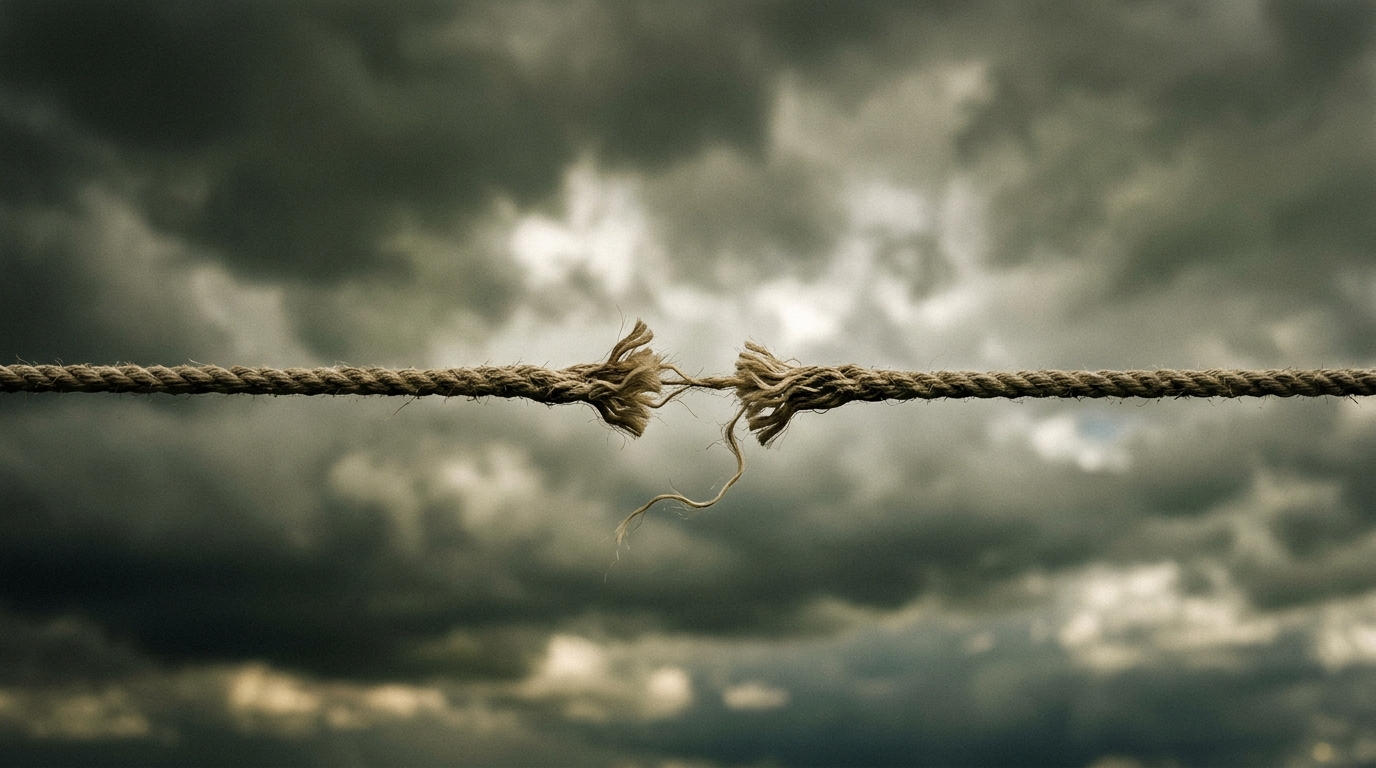
There is a silence that is not peace.
I know the other kinds. The silence of an early morning before the city wakes, or of a room after someone you love has left it. The silence of a long drive with the windows down. Those silences hold you. This one doesn’t. It sits on your chest and waits.
I have been thinking about it for days, because I keep returning to a question I can’t put down. When someone leaves this world with no mark on them, after years of fighting a war nobody saw, what do we say happened to them? Do we say they gave up? Or do we admit that they were worn down, slowly and quietly, by everything they could never bring themselves to say?
I don’t think the question has a clean answer. But I think it deserves to be asked honestly, and not whispered about.
What happens to words we swallow
I used to believe that unspoken things simply faded. You don’t say it, it passes, and life moves on. I know now that this is not how it works.
A word you swallow doesn’t disappear. It goes inward and waits. Grief that finds no door, fear that no one is told about, loneliness that is dressed up as “I’m fine” so the room can stay comfortable: all of it settles somewhere behind the ribs and keeps accumulating.
And so a person learns to live two lives. The outer one smiles, answers messages, shows up, even makes others laugh. The inner one is a weather system that never clears. The cruelest part is how good we become at the performance. The better we get at it, the more alone we are inside it.
I have worn that calm. I know how heavy a face can be when it is held up for other people.
Silence is not empty
We talk about silence as if it were an absence, a gap where nothing happens. But silence has force. When a person is afraid of being a burden, afraid of being judged, afraid that saying the true thing out loud will change how everyone looks at them, silence stops being a choice and becomes a pressure. The world around them presses it in. Every “be strong.” Every “why are you so sensitive?” Every uncomfortable pause when someone almost tells the truth, and everybody looks away, kindly, to spare them.
None of us means harm. Most of us are just frightened of what we don’t know how to hold. But that small, collective flinch teaches people to stay quiet. I’ve watched it teach people I love.
Not one cause, but many
I want to be careful here, because the easy stories are both wrong.
One easy story says it was entirely their own doing, a private failure, a weakness. The other says the world did it to them, and no one is responsible but everyone. Neither is fair to a human life, which is more tangled than either.
What I believe is closer to this. There was stigma that told them pain was shameful. There was exhaustion, because fighting your own thoughts every day, month after month, is among the most draining work a human being can do, and no one pays you or even notices. And there was a narrowing, a slow tunnel where the options seemed to disappear one by one.
And I want to say something about that tunnel, because I think it is the most misunderstood part. In the darkest stretches, I don’t believe most people are reaching for death. They are reaching for quiet. They want the noise to stop. They want one hour, one night, one lifetime of not being at war with themselves. The tragedy is that the mind in that state cannot see that the quiet they long for exists on this side too, when the load is shared and the noise is finally spoken out loud to someone who stays.
Load and limit
I think often about buildings. A beam doesn’t fail because it is weak or because it chose to. It fails when the weight placed upon it passes what it was built to carry. No engineer stands over the rubble and calls the beam a coward.
Yet we do this to people. We forget that a mind has a load-bearing capacity too. Add grief, add unspoken conflict, add isolation, add years of pretending, and take away every outlet, every beam of support that might share the weight. Then one day the structure gives.
That is not weakness. It is physics, with a human heart inside it.
And here is the part that breaks me. The thing that kept them going for so long, the silence they chose to protect themselves and the people they loved, is the very thing that eventually made survival impossible. The armor became the cage.
What I want to do differently
I don’t want to end with a lecture. I’m not qualified for one, and grief doesn’t want lectures anyway. But I want to name a few small things I’m trying to practise, because they’re all I have.
To make room for the unsayable. Writing is how I do it. For you it might be a long walk with one trusted person, or a professional who is paid to listen without flinching. The where matters less than the fact that the words leave your body.
To stop treating honesty as a burden. When someone says “I’m struggling,” I want to hear it as trust, not as a problem to fix or a mood to manage. Asking for help is not collapse. It is the most practical thing a person can do.
To ask the second question. Not just “how are you?” but the one after “fine.” Then to stay quiet long enough for the real answer to arrive, even when it’s uncomfortable. Especially when it’s uncomfortable.
For whoever is carrying it right now
If you are the one holding the storm behind a calm face, please hear this: you were not built to carry it alone. Nobody was. The weight you’ve been managing in silence is real, and so is the exhaustion. Telling one person, even badly, even in half-sentences, can change the load. If you are in immediate danger, or the quiet you’re craving feels like the end of everything, please contact your local emergency number or a crisis line right now, and tell someone near you tonight.
To those of us on the outside: let’s be the kind of people it is safe to be honest with. Let’s not flinch.
No one should have to fight an entire war alone inside their own mind. Giving words to the silence won’t end the battle. But it is often where the weight first begins to lift.
Related reading: Managing Pain: The Burden of Public Perception
Loading comments…