Navyaa

Welcome to NAVYAA—a space created for hearts that feel deeply. This blog is for sharing, reflecting, and supporting growth in relationships and emotional self-discovery, focusing on healing, empathy, and honest connection.

  • Exploring Timeless Poetic Paradoxes

    The last line, “Waqt ne kiya kya haseen sitam,” is a very famous poetic phrase in South Asian culture. It captures the bittersweet nature of life—how time can be both cruel (sitam) and beautiful (haseen) at the same time, often by bringing people together or apart in unexpected ways.

    1. The Paradox of Aimless Action

    The lines “Jayenge kahan sochta nahi / Chal pade magar raasta nahi” (Where will I go? I do not think / I’ve set out, though there is no path) reflect the Existentialist idea that action precedes essence.

    • The Concept: Often, we feel we must have a “map” before we start our journey. Philosophy suggests the opposite: the path is created by the walking.
    • Writing Angle: You could write about the courage it takes to move forward without a clear destination, and how “getting lost” is often the only way to truly find oneself.

    2. The Nature of “The Search”

    The lyric “Kya talash hai kuch pata nahi” (What am I searching for? I have no idea) speaks to a universal human condition: Sublime Longing.

    • The Concept: This is the feeling that something is missing, but we cannot name it. In Sufi philosophy or Romanticism, this is often seen as the soul’s yearning for a higher truth or a return to a “home” it can’t quite remember.
    • Writing Angle: Explore the beauty of the “unknown search.” Is the goal actually to find something, or is the search itself what gives life its flavor?

    3. The Heart as a Dream-Weaver

    “Bun rahe hain dil khwab dam-ba-dam” (Moment by moment, the heart keeps weaving dreams) describes the heart as an active creator of reality.

    • The Concept: Even in the dark (like the visuals in the video), the human spirit cannot help but hope. This is the Stoic idea of internal versus external worlds—while the outside world may be a dark, rainy park, the internal world is a loom weaving dreams.
    • Writing Angle: Focus on the “persistence of hope.” How does the heart protect itself by imagining better worlds, even when the current path is invisible?

    4. The “Beautiful Injustice” of Time

    The final line, “Waqt ne kiya kya haseen sitam” (What a beautiful injustice time has committed), is the most complex.

    • The Concept: This is the philosophy of Dualism. Life is rarely just “good” or “bad.” Time is a thief (it takes away our past), but it is also a painter (it gives us memories and wisdom). The “injustice” is that we must lose things to value them.
    • Writing Angle: Reflect on the “bittersweet.” Write about a moment in your life that was painful but resulted in something beautiful—a scar that became a badge of honor.

    #PhilosophyOfLife #NightThoughts #Introspection #WritersCommunity #RainyAesthetic #Mindfulness #LifeLessons #PoeticJustice #DeepThinking #Wandering #SelfDiscovery #Existentialism


  • The Gap Between Who You Are and Who You Want to Be

    There’s a strange moment that arrives without warning.

    You wake up one day and realize you are living a life you never consciously chose. Not a bad life. Not even an unsuccessful one. Just… unfamiliar. And the most unsettling part is not where you are—but who you’ve become on the way here.

    शायद मैं भूल गया हूँ कि मुझे क्या बनना था।

    Perhaps I have forgotten what I once wanted to become.

    मैं भूल गया हूँ कि मैंने शुरुआत कहाँ से करी थी।

    I have forgotten where I even started from.

    क्योंकि समय ही कहाँ है ये अब सोचने का।

    Because there is simply no time left to think about these things anymore.

    कभी-कभी लगता है मैं वो बन गया हूँ जो मैं बनना नहीं चाहता था।

    Sometimes it feels like I have become the very person I never wanted to be.

    और अब कभी-कभी लगता है कि जो मुझे बनना था, वो मुझसे बहुत ज़्यादा दूर खड़ा है।

    And now, sometimes it feels like the person I was meant to be is standing very, very far away from me.

    The poem captures this feeling perfectly. It speaks of identity drift—the slow, almost invisible distance that grows between who you once wanted to be and who you are now. No dramatic fall. No single wrong decision. Just time doing what it does best: moving forward while you’re busy surviving.

    The Gap Between the Ideal and the Real

    At some point, the gap widened.

    The person I admired—the version of me who felt alive, curious, and certain—now feels like someone I once knew but lost touch with. And the irony hurts: I didn’t become someone I hated on purpose. I just became someone I never intended to be.

    That realization is heavy because it forces a question we often avoid:

    When did I stop choosing and start drifting?


    The Seed: When Everything Made Sense

    In the beginning, there was clarity.

    Not clarity of strategy, but clarity of why. The plans were simple and pure, not burdened by practicality or fear. I didn’t ask whether it was possible or profitable. I only knew it mattered.

    That version of me wasn’t wiser—but it was honest. It trusted instinct over approval. Energy over security. Purpose over validation.

    That was the seed.


    The Drift: How It Slipped Away

    The drift didn’t arrive as a rebellion. It arrived disguised as responsibility.

    Life happened in small, reasonable steps. Bills needed to be paid. Expectations had to be met. Stability started sounding smarter than passion. And slowly, the noise of survival drowned out the quiet voice of intention.

    I told myself things were temporary. “I’ll do this for now.” “I’ll get back to myself later.”

    But later, it never announced itself.

    There was no time to think. No space to reflect. I wasn’t steering anymore—I was just responding. And when you live in reaction mode long enough, direction disappears.


    The Warning: Success Without Belonging

    Here’s the uncomfortable truth the poem hints at:

    You can succeed in a life that doesn’t belong to you.

    And when that happens, achievement feels hollow. Milestones feel oddly quiet. You reach places you once dreamed of, only to realize the dream belonged to someone else.

    That’s when crises appear—not because you failed, but because you succeeded at the wrong thing.

    The original you doesn’t vanish. It just moves farther away. And one day, you fear it might become a stranger.


    Bringing Back the Original You

    The solution isn’t to burn everything down or rewind time. Growth isn’t about erasing who you’ve become—it’s about integrating who you were.

    Return to Your Why

    Set aside real, uninterrupted time. Ask yourself why you started. Not what impressed others—but what made you feel alive. That answer is still there. Quiet. Patient. Waiting.

    Choose One Act of Truth

    You don’t need a life overhaul. You need one daily act that belongs to the original you. Fifteen minutes. One habit. One promise: you don’t negotiate with the world.

    Identity isn’t reclaimed in grand gestures. It returns through consistency.

    Create Space to Think

    Silence is not laziness. It’s the leadership of the self. Even ten minutes of stillness can interrupt autopilot living and remind you that you still have a choice.

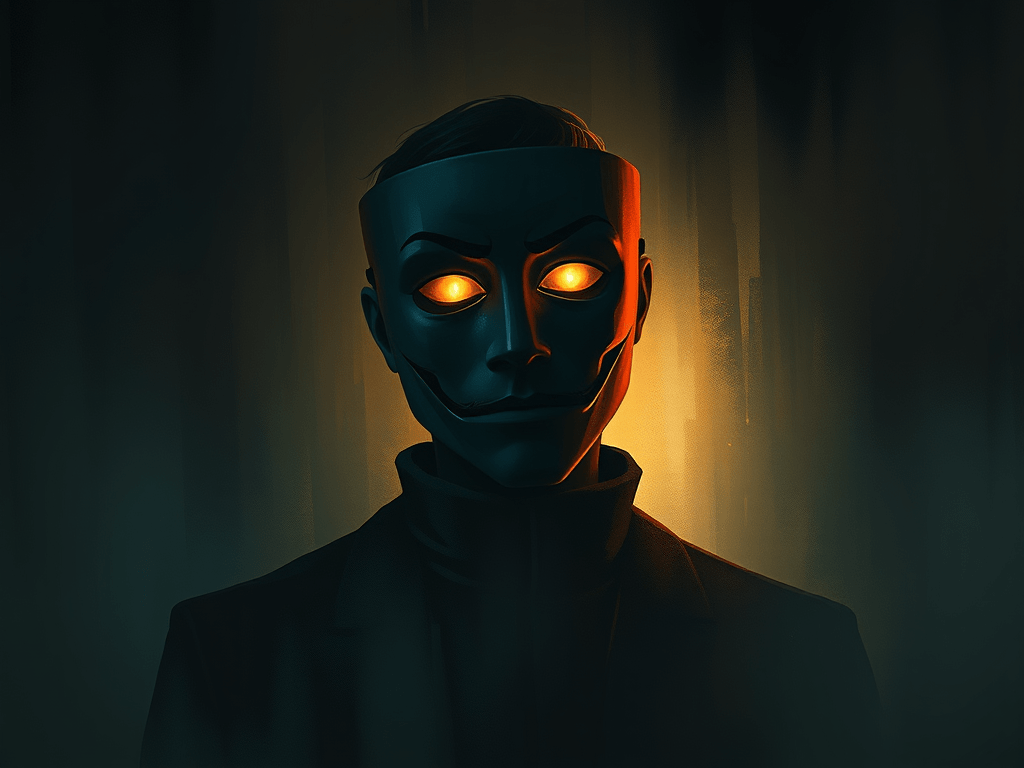
    Name the Mask

    Look honestly at the version of yourself you’ve grown uncomfortable with. Name the traits. Awareness is power. Once named, they lose control.

    Forgive the Drift

    This is crucial.

    The person you are today survived things your younger self never imagined. The drift wasn’t weakness—it was adaptation. Honor that strength. Then redirect it.


    You’re Not Lost. You’re Paused.

    This isn’t a story of failure. It’s a story of forgetting—and remembering.

    The original you isn’t gone. It’s just been quiet while you were busy becoming capable. And now, perhaps, capable enough to return—not as who you were, but as who you were meant to become.

    The journey back doesn’t require starting over.

    It only asks that you start listening again.

  • Finding Clarity in a Noisy World: My Path to Intentional Living

    This sentence is not an announcement. It’s a quiet conclusion.

    It comes after exhaustion—not the kind sleep can fix, but the kind that settles in when you’ve lived too long out of alignment with yourself. It reflects a state of mind where noise has finally lost its authority over you. Where approval, urgency, and obligation no longer override inner truth.

    My state of mind

    I am no longer scattered.
    Earlier, my mind was always negotiating—Should I adjust? Should I stay silent? Should I try harder to be understood? That constant bargaining created inner chaos. Now, there is stillness. Not because life is perfect, but because I have stopped fighting myself to fit into places that were never meant to hold me.

    There is clarity in knowing that peace is not something to be earned through sacrifice. It is something to be protected through boundaries.

    My thought process

    My thinking has shifted from reactive to intentional.

    I no longer ask, “Will this please others?”
    I ask, “Will this cost me my integrity, my energy, or my self-respect?”

    I understand now that every yes is a withdrawal from a finite inner account. And I refuse to go bankrupt emotionally just to maintain appearances. I don’t overexplain. I don’t justify my distance. Silence, for me, has become a form of honesty.

    What changed me as a person

    I used to believe availability was kindness.
    Now I understand that discernment is wisdom.

    What changed me were the moments when I gave too much and received emptiness in return. The times I stayed where I was tolerated, not valued. The emotional labor spent on people who only showed up when it benefited them.

    These experiences didn’t harden me—they refined me.
    I didn’t lose empathy; I learned where it belongs.

    I am still kind, but no longer careless with my kindness.
    I am still open, but no longer accessible to everything and everyone.

    What people should expect from me

    People should expect clarity, not compliance.
    Presence, not people-pleasing.
    Depth, not convenience.

    If I engage, it is because I choose to—not because I feel obligated.
    If I stay, it is because there is mutual respect—not emotional dependency.
    If I leave, it is without drama, because alignment doesn’t require explanation.

    What I no longer expect from anyone

    I no longer expect understanding.
    I no longer expect consistency from inconsistent people.
    I no longer expect effort from those who only know how to take.

    Expectations are contracts we silently sign with disappointment. I have canceled those agreements.

    Instead, I expect from myself:

    • To honor my intuition
    • To walk away without guilt
    • To choose peace over proof
    • To live in truth, even if it makes me misunderstood

    This quote is not about isolation.
    It is about self-loyalty.

    “I am no longer available for things that do not align with my soul” means: I have finally decided to live from within, not for the world’s approval.

    And that changes everything.

    #SoulAligned #AuthenticLiving #InnerAlignment #ChoosePeace #ProtectYourEnergy #SelfRespectFirst #BoundariesAreBeautiful #PersonalEvolution #MindsetShift #EmotionalIndependence #LetGoAndGrow #SelfLoyalty #SpiritualGrowth #ConsciousLiving #HealedNotHardened #InnerWork #LivingInTruth #WordsThatHeal #fyp

  • From Average to Extraordinary: A Mindset Shift

    I never woke up one morning and said, “I’m afraid of being average.”
    It was quieter than that. It lived in the pauses. In the moments after a long day, when I asked myself, “Is this it?” In the comparison that crept in while scrolling through other people’s achievements. In the subtle discomfort of knowing I was capable of more—but not yet living it.

    Average isn’t loud. Failure is loud. Success is loud.
    Average is silent. And that silence is what scared me the most.

    Where the Fear Begins

    The fear of being average doesn’t come from a lack of ambition. It comes from awareness. From knowing your own potential and watching time pass without fully honoring it.

    For me, it showed up as restlessness. I was doing “fine” by most standards. Life looked acceptable from the outside. But internally, there was friction—like driving with the handbrake half pulled. I wasn’t failing, but I wasn’t moving forward either. That in-between space slowly became heavier than failure itself.

    The real fear wasn’t being judged by others.
    It was reaching the end of my life, and I realized I had negotiated too much with comfort.

    How It Changes Your Mindset

    When the fear of being average takes root, your mind becomes a battlefield.

    You start questioning your choices:

    • Am I playing it too safe?
    • Did I choose convenience over conviction?
    • What if I’m wasting my best years?

    At first, this fear can paralyze you. You overthink. You wait for clarity. You consume inspiration without acting on it. You tell yourself you’re “preparing,” when in reality, you’re postponing discomfort.

    But slowly, something shifts.

    You realize that the average isn’t a fixed identity.
    It’s a daily decision.

    And that realization is both terrifying and freeing.

    The Truth No One Says Aloud

    Most people don’t fail because they aim too high.
    They fail because they stop aiming altogether.

    Being average is rarely about lack of talent. It’s about:

    • inconsistent effort
    • fear of standing out
    • fear of being misunderstood
    • fear of starting again

    We are taught to avoid risk, to blend in, and to be realistic. But realism, unchecked, becomes a quiet sedative. It numbs urgency. It makes settling feel responsible.

    The moment I understood this, my fear changed shape.
    It stopped being something that haunted me—and became something that pushed me.

    Turning Fear Into Direction

    Overcoming the fear of being average isn’t about chasing perfection or external validation. It’s about alignment.

    Here’s what helped me reset my direction:

    1. Redefining “Top.”
    Being at the top doesn’t mean being above others. It means being at the top of your own capacity. Competing with yourself removes the noise and brings focus.

    2. Ruthless Self-Honesty
    I stopped asking, “Am I busy?” and started asking, “Am I progressing?” The answers were uncomfortable—but necessary.

    3. Choosing Discomfort Daily
    Small, deliberate discomfort compounds. Difficult conversations. Consistent routines. Showing up when motivation disappears. Average dissolves under consistency.

    4. Letting Go of the Timeline
    Comparison creates panic. Purpose creates patience. Once I stopped racing against others, my path became clearer and calmer.

    5. Building Identity Before Outcomes
    I stopped obsessing over results and focused on becoming the kind of person who naturally produces them—disciplined, curious, and resilient.

    Where It Takes You

    When you stop fearing average and start respecting your potential, your mindset changes.

    You become less reactive and more intentional.
    You trade approval for self-respect.
    You stop waiting for the “right moment” and start creating momentum.

    Life doesn’t suddenly become easier—but it becomes honest. And honesty brings energy. Direction brings confidence. Confidence compounds into excellence.

    A Quiet Promise to Yourself

    The fear of being average never fully disappears. And maybe it shouldn’t.

    It’s a reminder. A signal. A quiet nudge asking, “Are you still growing?”

    The goal isn’t to silence that fear.
    The goal is to let it guide you—toward courage, toward depth, toward a life that feels fully lived.

    Because in the end, the real tragedy isn’t being average.

    It’s knowing you could have been more—and choosing not to try.

    #FearOfBeingAverage #PersonalGrowth #SelfImprovement #MindsetShift #LifePurpose #InnerGrowth #MentalStrength #PersonalDevelopment

  • Managing Pain: The Burden of Public Perception

    “तो कठिन समय में पीड़ा व्यक्ति को उस समय होती है जब संसार को पता लग जाए की आपका समय कठिन चल रहा है। बोले की जब संसार को ये पता न लगे की आपका समय कठिन चल रहा है, तब बेटा कठिन समय परेशान नहीं करता।”

    There’s a quiet truth about human psychology that rarely gets spoken out loud. It surfaced recently in a viral clip where a speaker observed:

    “In difficult times, a person feels pain only when the world finds out. If the world doesn’t know, the difficult times don’t trouble you as much.”

    At first, this feels backwards. We’re taught that sharing heals, that opening up lightens the load. And sometimes, it does. But beneath that comforting idea lies a harsher, more honest reality—one shaped by ego, perception, and the social circus we all live in.

    1. The Burden of Perception

    When a struggle remains private, you deal only with the problem itself. If you’re broke and no one knows, you quietly adjust—skip luxuries, eat less, and find solutions. It’s hard, but it’s contained.

    The moment the world finds out, something changes. The problem multiplies.

    Now you’re no longer managing money—you’re managing shame, pity, and judgment. The pain isn’t always the hardship; it’s the wounded ego. Humans are tribal by nature. Status matters. And when the tribe sees you as “falling,” the internal battle becomes a public performance.

    The curtain rises, and suddenly your survival becomes a spectacle.

    2. The Worldly Circus: Spectators, Not Supporters

    The “Worldly Circus” isn’t made up of villains. It’s composed of acquaintances, neighbors, coworkers, and digital “friends”—people who watch, comment, and quietly compare.

    • Pity as Power: Pity often comes wrapped as kindness, but it subtly shifts the power dynamic. Someone who pities you places themselves above you. That silent hierarchy can sting deeper than the problem itself.
    • Schadenfreude: A darker truth—some people find comfort in others’ struggles. Your fall reassures them that their own lives aren’t so bad.
    • The Narrative Trap: Once your struggle becomes public, it becomes your identity. You’re no longer you. You’re “the one who failed,” “the one who lost,” “the one who’s struggling.” Escaping that label becomes an extra weight you never asked to carry.

    The circus doesn’t always clap. Sometimes, it just stares.

    3. The Strength of “Gupt” (Hidden) Resilience

    There is a quiet power in suffering privately.

    When your hardship is hidden, your dignity stays intact. You don’t have to perform pain, explain yourself, or absorb endless advice that helps more with the speaker’s ego than your reality.

    By keeping your difficult seasons private, you protect your story. You deny the world the chance to turn your life into gossip, a cautionary tale, or dinner-table entertainment.

    This isn’t a weakness. It’s strategic silence.

    4. Choosing Between Community and the Circus

    Does this mean we should never ask for help? No. It means we must choose wisely.

    • Community is the small, trusted circle that supports without spectacle.
    • The Circus is the wide audience that consumes your life like content.

    The lesson isn’t isolation—it’s discretion. Not everyone deserves a front-row seat to your storms.

    If you can endure your “winter” without the noise of the crowd, you’ll often find the cold isn’t as cruel as it first seemed.

    Be like the moon—
    even when it isn’t full or bright,
    it still moves through the dark alone.
    without asking the stars for permission to be dim.

  • Kafka’s Insight: Time and Authenticity in Relationships

    Kafka would have recognized this thought immediately—not as philosophy written from a distance, but as something lived, suffered, and quietly observed.

    When we say “apna koi nahi hota, apna sirf waqt hota hai” (“no one is truly ours, only time is”), we are touching the same nerve Kafka exposed when he wrote about the costume party of life. Kafka wasn’t accusing people of being fake out of malice; he was mourning the fact that survival itself forces us to perform. Time, circumstances, power, fear—these decide which mask people wear and whom they stand beside.

    From Kafka’s lens, relationships are rarely pure choices. They are in negotiations with time. When time is kind, people have the luxury to be loyal, warm, and present. When time turns cruel, fear speaks louder than affection. Kafka understood that most people don’t betray others because they are evil—they do it because they are terrified of being left behind by time itself.

    That’s why the line “waqt accha hua to gair bhi apne ho jaate hain” feels painfully accurate. Kafka saw how kindness often appears when it is safe. When things are stable, empathy flourishes. But once uncertainty enters—failure, poverty, illness, rejection—the masks tighten. Suddenly, even “our own” look away, not always out of hatred, but out of self-preservation.

    What makes Kafka especially relevant here is that he never placed himself above this truth. He included himself among the masked. His shame wasn’t directed only at others—it was inward. “I showed up wearing my real face” is not a boast. It’s a confession. He felt exposed, fragile, and almost foolish for believing that authenticity would be rewarded in a world structured around appearances and timing.

    From a personal, human perspective, this realization hurts because it strips away comforting illusions. We grow up believing relationships are fixed—family, friends, love. Kafka teaches us that many bonds are conditional, silently governed by timing, convenience, and circumstance. That doesn’t mean love isn’t real; it means it’s vulnerable to forces larger than emotion.

    And yet, the final line—“jo tumhara apna hoga wo tumhe dhoondh ke milega”—is where Kafka would quietly soften. He believed that while the world may not protect sincerity, sincerity still matters. Not because it guarantees loyalty, but because it preserves your inner coherence. If you lose that, you survive—but as a stranger to yourself.

    Believing in yourself, then, is not motivational talk. It’s survival advice. Kafka knew that when people drift away with changing time, the only continuity you truly possess is your inner truth. If something—or someone—belongs with you beyond circumstance, they won’t need perfect timing. They will arrive even when things are inconvenient, even when it costs them something.

    Kafka’s sadness was not that people wear masks. It was the world that made masks necessary. And his quiet courage was choosing, again and again, to remain honest—even when it hurt, even when it isolated him.

    That’s why this thought feels so deeply human. It doesn’t teach cynicism. It teaches clarity:
    Time reveals people. Hard moments filter relationships. And in the end, the only thing you must not abandon—no matter how bad times get—is yourself.

  • The Paradox of Body and Soul: Exploring Existence

    We live inside a contradiction.
    We walk, breathe, love, suffer, build, and dream—all inside a temporary vessel that science calls a body and philosophy calls a home for the soul.
    Yet, when the body ends, a question rises like smoke:

    If the body turns to ash, what becomes of “me”?

    This paradox exists because two truths run parallel and never touch:

    1. The Physical Truth (Reality)

    The body is matter.
    It can be touched, burned, buried, broken, and healed.
    Science tells us we’re made of cells, atoms, water, and electricity.

    When fire touches it, it collapses into ash.
    When time touches it, it wrinkles and decays.

    From this standpoint, nothing survives except memories and molecules.

    1. The Spiritual Truth (Myth or Metaphysics)

    Every culture across time has believed in something inside the body that is not the body.

    Some call it आत्मा (ātmā)

    Some call it soul

    Some call it consciousness

    Some call it 生命力 (life force)

    Some call it chi/prana

    This inner presence is described as:

    invisible

    weightless

    timeless

    aware

    un-burnable

    un-capturable

    Myth or not, it is the one idea humanity has never been able to let go of.


    🌓 Myth vs. Reality—Not Opposites, But Two Halves

    MYTH (The Hope)

    There is something in us that lives on.
    Something that watches the world through our eyes.
    Something that slips out when the body can no longer hold it.
    Something that travels to another dimension, another existence.

    This myth comforts us because it suggests:

    Death is a doorway, not the end

    Our loved ones didn’t vanish

    We are more than tissue and bone

    Life has meaning beyond survival

    REALITY (The Fact)

    Nothing in science detects a soul.

    No instrument, no scanner, no measurement picks up a “self” leaving the body.
    The body burns → becomes ash → returns to the soil → enters the wind → becomes part of earth again.

    From this angle, we are:

    chemistry

    biology

    temporary awareness

    a spark in a vast indifferent universe


    🌑 So What Are We in the End?

    Here is the paradox beautifully:

    We are bodies that fade, but we experience life as if we are something that won’t.

    We are physical, yet we carry feelings that feel bigger than the world.

    We are finite, yet we dream of infinity.

    We are dust, but we walk like we matter.

    Perhaps the truth lies somewhere in between.
    Maybe we are both at once:

    Matter that imagines meaning.
    Ash that dreams of eternity.
    Flesh that carries awareness.
    A temporary body hosting an unexplainable consciousness.


    🌬️ Have You Ever Felt a Soul?

    You asked something profound.

    No one has seen a soul.
    No one has touched it, photographed it, or proven it.

    But people have felt moments that don’t belong to the physical world:

    A strange calm in deep pain

    A presence in solitude

    A voice inside guiding you

    A sudden clarity in darkness

    A memory that feels older than this life

    A sense of someone watching over you

    The intuition that “I am more than this body.”

    These are not proofs…
    But they are experiences.


    🔥 When the Body Burns, What Leaves?

    Fire destroys flesh, but does it release something?

    Some believe:

    The soul leaves before the body burns

    The ash is only the container

    The essence moves to another realm

    Others believe:

    There is no soul

    What is left is only smoke

    We return to the earth and nothing more

    The paradox remains because neither side can be fully proven or disproven.


    🕯️ So What Is Our Being?

    Here’s a synthesis:

    We are consciousness experiencing the world through a temporary physical form.
    Whether that consciousness survives or dissolves… that remains the greatest mystery of existence.

    Maybe the soul is not a separate thing —
    Maybe our awareness itself is the soul.

    Maybe our ability to love, grieve, remember, and imagine is the soul.

    Maybe the invisible “I” inside the visible “me” is the soul.


    ✨ Final Thought

    Perhaps we are not bodies that have a soul.
    Perhaps we are souls that temporarily wear a body.

    Or perhaps the truth is even simpler:

    We are the universe experiencing itself through a human life—and returning someday to the same place from which we came.

  • Embracing Authenticity: The Courage to Be Real

    How true it was when it was said, “I was ashamed of myself when I realized life was a costume party, and I showed up wearing my real face.”

    The first time I really understood this quote, it didn’t arrive like wisdom. It arrived with discomfort.

    Because honestly—that’s how life feels sometimes. Like a massive costume party where everyone seems to have received a memo you somehow missed. People walk in wearing confidence like tailored suits, perfection like makeup that never smudges, and happiness like it’s permanently stitched to their faces. Conversations are polished. Emotions are filtered. Vulnerability is carefully hidden behind humor or success or silence.

    And then there’s you.

    You walk in without a costume. You speak honestly. You feel deeply. You assume—naively, maybe—that this is what people want. Real conversations. Real emotions. A real human being.

    At first, it feels right. Liberating, even. But slowly, subtly, you start noticing the shift. The awkward pauses. The way people change the subject when you speak from the heart. The way honesty makes the room quieter, heavier. Uncomfortable.

    That’s when the realization hits: being real isn’t always welcomed. It disrupts the performance.

    So you start adjusting. Not all at once—just enough to survive. You smile a little more, even when you don’t feel like it. You share less, even when you want to say more. You soften your truths, edit your emotions, and laugh at things that don’t quite land inside you.

    You try to fit into rooms that were never designed for your shape.

    And sometimes, it works. You blend in. You’re accepted. You’re “easy” to be around.

    But the cost is quiet and cumulative.

    The mask gets heavier. The effort gets exhausting. And one day, without warning, you realize something painful: you miss yourself. The unfiltered you. The honest you. The version of you that didn’t need permission to exist.

    That’s when the shame Kafka spoke about transforms into clarity.

    You weren’t wrong for showing up real. You were just early. Or rare. Or brave.

    Because in a world obsessed with appearances, authenticity is a rebellion. It takes courage to walk into a room without armor. It takes strength to remain soft in a culture that rewards numbness. And it takes self-respect to stop apologizing for being genuine.

    Not everyone will understand you—and that’s okay. Not every space deserves your truth. But the right ones will recognize it instantly. They won’t ask you to shrink or perform or pretend. They’ll feel relief when you walk in, because finally, someone else remembered how to be human.

    So if you’ve ever felt out of place for being too real, too honest, too much—this isn’t a flaw. It’s a sign.

    You’re not wearing a costume because you still remember who you are underneath it.

    And in a world full of masks, that might just be the bravest thing of all.

  • Embracing 2026: Intentions Over Resolutions

    New Year’s doesn’t arrive with fireworks in the heart.
    They arrive quietly—after exhaustion, after lessons, after survival.

    As 2026 begins, I don’t look back at 2025 with nostalgia. I look back with gratitude. Not because it was kind—but because it was honest. It showed me limits I didn’t know existed and strengths I didn’t know I carried.

    2025: The Year That Tested Everything

    2025 didn’t ask for permission.
    It arrived with challenges stacked like unanswered questions—health scares, emotional fatigue, delayed plans, broken expectations, and moments when simply getting through the day felt like an achievement.

    There were times when life slowed down without warning.
    Times when progress paused.
    Times when hope had to be rebuilt from scratch.

    But here’s the truth most people don’t say out loud:
    Some years are not meant for winning. They are meant to endure.

    And 2025 was one of those years.

    From Pain to Perspective

    What 2025 took away in comfort, it returned in clarity.

    • It taught me the value of time—not the rushed kind, but the fragile kind.
    • It taught me that health is not a background feature of life; it is life.
    • It taught me who stayed when things weren’t exciting.
    • It taught me that silence is sometimes protection, not loneliness.
    • It taught me patience—not as a virtue, but as survival.

    Slowly, without announcement, struggles began turning into lessons.
    Delays became redirection.
    Losses became filters.
    Pain became a teacher that didn’t care if I was ready.

    2026: A Year of Intent, Not Pressure

    I don’t welcome 2026 with unrealistic resolutions.
    I welcome it with intention.

    This year is about:

    • Choosing peace over proving points
    • Consistency over chaos
    • Health over hustle
    • Depth over noise
    • Growth that doesn’t need validation

    2026 isn’t about becoming someone new.
    It’s about becoming more aligned with who I already am.

    Turning Challenges into Blessings

    Looking back, I see it clearly now:
    What felt like setbacks in 2025 were actually safeguards.
    What felt like endings were necessary closures.
    What felt like weakness was my body and mind asking for care.

    The blessings of 2026 will exist because the foundations were tested in 2025.

    And maybe that’s the quiet magic of life—
    It breaks you just enough to rebuild you better.

    A Gentle Promise to the Year Ahead

    In 2026, I promise to listen more closely- to my health, my intuition, and my boundaries.
    I promise to move forward without carrying unnecessary weight from the past.
    I promise to celebrate progress, even when it’s invisible to others.

    If 2025 taught me how to survive,
    2026 will teach me how to live—slowly, intentionally, and with gratitude.

    Here’s to a year where challenges transform into blessings.
    and where becoming whole matters more than becoming perfect.

    Welcome, 2026.

  • Understanding the Loneliness of Self-Growth

    Self-growth is often marketed as something uplifting—new habits, better boundaries, stronger confidence. But there’s a quieter truth many people don’t talk about:

    Growth can feel deeply lonely.

    As someone who supports people through emotional growth, and also as someone who has walked this path personally, I’ve seen how change doesn’t just add things to your life—it also removes what no longer fits. And that space can feel uncomfortable before it feels freeing.


    Why Self-Growth Often Feels Isolating

    1. You outgrow familiar dynamics

    When you start changing how you think, react, or tolerate, old patterns don’t work anymore. Conversations feel different. Some connections feel strained. Not because you’re doing something wrong—but because you’re no longer playing the same role.

    Growth disrupts comfort.

    2. Fewer people understand your choices

    Choosing healing over chaos, clarity over people-pleasing, or peace over approval often doesn’t come with applause. Others may not understand why you say no more often, need space, or value your emotional health.

    And being misunderstood can feel lonely.

    3. You’re learning to sit with yourself

    Self-growth asks you to face emotions you once avoided—grief, fear, regret, uncertainty. Without distractions or unhealthy coping mechanisms, you meet yourself more honestly.

    That kind of self-awareness can feel isolating at first.

    4. You stop seeking validation

    As you grow, external approval matters less. But that shift can feel like losing a safety net. When you stop needing constant reassurance, there’s a quiet space where old validation used to live.

    Silence isn’t emptiness—it’s adjustment.


    Why Loneliness Doesn’t Mean You’re Off Track

    This loneliness isn’t a sign you’re failing. It’s often a sign you’re becoming more aligned.

    Growth creates a gap between who you were and who you’re becoming. And for a while, you live in between. That in-between phase can feel uncomfortable, but it’s also where clarity forms.


    Why It’s Still Worth It

    You build a relationship with yourself

    Loneliness teaches you how to self-soothe, self-reflect, and trust your own voice. You learn that you can sit with discomfort and still move forward.

    Your connections become more intentional

    You stop forcing closeness. Instead, you attract people who meet you with honesty, respect, and emotional depth. Fewer connections, but healthier ones.

    You choose peace over performance

    Growth allows you to stop performing for acceptance. You begin living in a way that feels sustainable, not exhausting.


    A Personal Note

    There were moments in my own journey where growth felt like standing alone in a room that once felt full. But over time, I realized I wasn’t losing people—I was finding myself.

    And that changed everything.


    The Bottom Line

    Self-growth feels lonely because you’re shedding old versions of yourself.
    Because you’re learning to be present without distraction.
    Because you’re choosing truth over familiarity.

    And while the loneliness can feel heavy, it’s temporary.

    What lasts is this:
    clarity, self-trust, and a life that feels like it actually belongs to you.

    That kind of growth is always worth the quiet.

    SelfGrowth #LonelyButGrowing #HealingJourney #PersonalDevelopment #InnerWork #EmotionalWellness #SelfAwareness #Outgrowing #GrowthMindset #TherapistInsights #MentalWellbeing #ChoosingYourself #PersonalTransformation