1. Why Do My Relationships Repeat the Same Patterns?
I've asked myself this question more times than I'd like to admit. Usually late, when the house is quiet, and there's nobody left to perform for.
Why does it end the same way? Why do I keep choosing the same kind of person? Why does the ache in the middle of every relationship feel like something I've already lived?
For years I treated it as a story about bad luck. Wrong timing, wrong people, wrong city. It was easier to believe the universe kept dealing me the same hand than to consider that I might be the one reaching for the same card.
Then came a quieter, harder thought: the faces change, but the feeling doesn't. And a feeling that returns that reliably isn't coincidence. It's a signature.
If you're here asking the same thing, I want you to know you're not broken. Repeating patterns in relationships are one of the most common struggles in love. It isn't a verdict on your worth. It's a question, and questions can be answered.
2. What Shapes Our Relationship Blueprints?
Somewhere before we could choose, we were taught what love feels like.
Nobody sat us down and explained it. We absorbed it, the way you absorb an accent: from the emotional weather of the home we grew up in, from who was warm and who was distant, from what happened when we needed something, and from what we saw adults do when they were hurt. All of it was filed away, quietly, as this is what love is.
If love arrived unpredictably, you may later find steadiness oddly suspicious. If you were praised for being the strong one, you may keep carrying everyone and call it devotion. If saying what you needed wasn't safe, you may drift toward people who never ask you to.
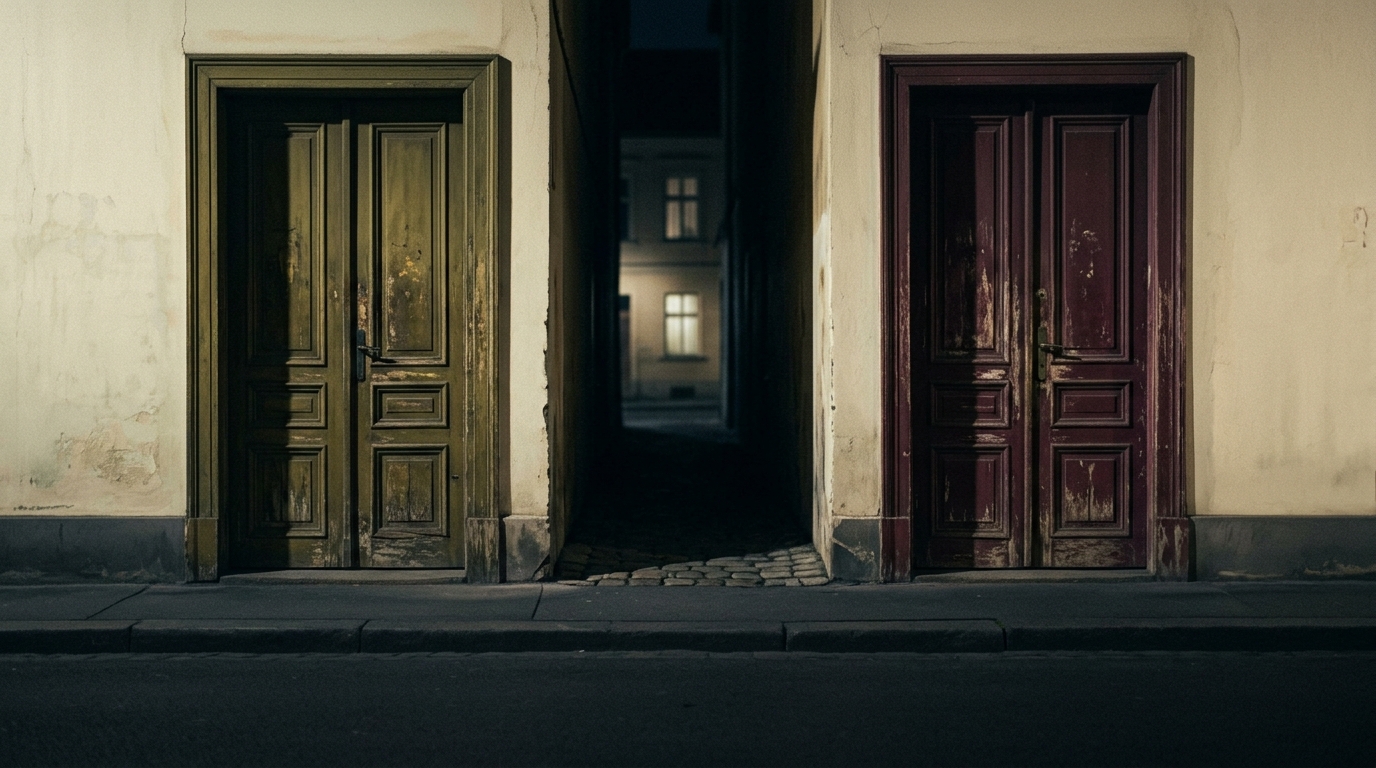
That's a blueprint. And the cruel part is that the nervous system doesn't care whether the blueprint is healthy. It cares only that it's familiar. Familiar feels like home. Home feels like safety. So we walk, again and again, toward doors that look different but open into the same room.
3. Spotting and Naming Your Cycles
You can't change what you can't see, so the first work was just looking.
I started with questions I'd been avoiding:
What kind of person do I keep choosing? What role do I always end up playing: the rescuer, the giver, the one who disappears, or the peacemaker? How do these relationships usually feel by the end? Drained? Anxious? Unseen?
I made one rule for myself: observe, don't prosecute. The moment I turned it into a trial, I got defensive and learned nothing. Patterns are learned behaviors. They were built to protect me once, in a smaller world, and they simply never got updated.
For me, the cycle looked like this: I'd draw close to someone who couldn't fully meet me. I'd take on the work of closing that gap, being understanding, being patient, and adjusting. I'd feel quietly resentful and call it love. And when it finally collapsed, I'd be surprised, as though I hadn't seen it coming from the first conversation.
Naming it, saying it plainly to myself, was strangely painful and strangely freeing. The pattern lost some of its power the moment it had a name.
4. Uncovering the Root Causes: Attachment and Beliefs
Once I could see the cycle, I wanted to know where it came from. Two things kept surfacing.
Attachment. How I learned to bond, to seek closeness, to protect myself from losing it. My attachment style shaped how I reacted to distance, to silence, and to a delayed reply in ways that felt like pure instinct but were really old memories.
Beliefs. Underneath the behavior sat a few quiet convictions, so old that they didn't feel like opinions. They felt like facts:
I have to earn love. People eventually leave. I'm too much. Love requires sacrifice. Healthy love won't choose me.
I started asking each one two questions. Who taught me this? And is it actually true today, in my adult life?
Often the honest answer was humbling. It had been true once. For a smaller version of me, in a smaller world, it may even have been protective. But I'd gone on living by it long after the evidence had changed, and these beliefs had been quietly steering me toward the very outcomes I feared.
You don't dismantle a belief like that by deciding to. But you can loosen it by questioning it. And a loosened belief makes space for a different choice.
5. Gentle Steps to Break the Pattern
I used to imagine that changing a pattern required drama. A clean break. A new city, a new personality, a total reinvention. What I found instead was that patterns dissolve through small, repeated, almost embarrassingly quiet movements.
Micro-boundaries. Not ultimatums. Tiny shifts. Saying "let me think about it" instead of agreeing on reflex. Naming a small need without rehearsing it for an hour. Not initiating every conversation. Letting someone else show up for me. Saying no without a paragraph of apology. Each one taught my nervous system something radical: love doesn't require self-abandonment.
Slowing down my reactions. So much of the pattern ran on impulse: panic, insecurity, the old fear of being left. I learned to pause. To ask, is this my fear, or is this reality? To name the emotion out loud. To breathe, to ground myself, to give myself a few seconds before responding. In those seconds, a different response became possible.
Replacing judgment with curiosity. I did fall back into old patterns. More than once. At first I met each slip with "I messed up again." That sentence kept me stuck. What helped was a different set of questions: what part of me was activated? What need was asking for attention? How could I show up differently next time? Curiosity opened doors that self-criticism kept locked.
Choosing differently. This is the one that changed everything. You don't break a pattern by fixing other people. You break it by choosing differently. As that began to happen, I noticed my own compass shifting. Emotionally distant people stopped pulling at me. Consistency, which I'd once dismissed as boring, started to feel like comfort. Calm began to look more attractive than chaotic chemistry.
6. Building Safety and Self-Compassion
Underneath all of it, I think patterns repeat for one reason: some part of us doesn't feel safe choosing differently.
Familiar pain is predictable. New love, the kind that's steady and kind and doesn't cost you yourself, can feel unsettling precisely because you don't know how to hold it. The old part of you keeps whispering, This isn't what love feels like. And the old part is right, in the sense that it isn't what love has felt like for you so far.
So the deepest work isn't about partners at all. It's about building safety inside.
That means self-compassion, speaking to myself the way I'd speak to someone I love. It means validating my own emotions rather than waiting for others to. It means learning to receive love, not only give it, which turned out to be far harder than I expected. It means trusting my own intuition again and building worth from within, where it can't be revoked.
When I feel safe in myself, something remarkable happens. I stop searching for familiar pain. I no longer need the old ache to prove that something is real.
7. Transformation Is Possible: A Closing Reflection
I don't want to pretend the work is linear. It isn't. There are good weeks and humbling ones. There are moments I catch the old pattern a split second too late and have to start again.
But I've come to believe something I couldn't have believed at the beginning: every cycle I was tired of repeating was also a doorway. Behind each one was something I needed to understand about myself, and the pattern kept returning because I hadn't yet looked.
You don't have to uproot your life overnight. Small choices, mindful pauses and gentle boundaries, repeated patiently, create enormous shifts over time.
You are not trapped. You are transforming.
Your patterns were learned in pain. They can be unlearned in love.
And you deserve a relationship that feels like support, safety, and softness, not survival.
Loading comments…