1. The Comfort of Darkness
It's strange how the darkness doesn't feel like an intruder anymore. It feels like a room I've lived in for so long that I've stopped noticing the walls.
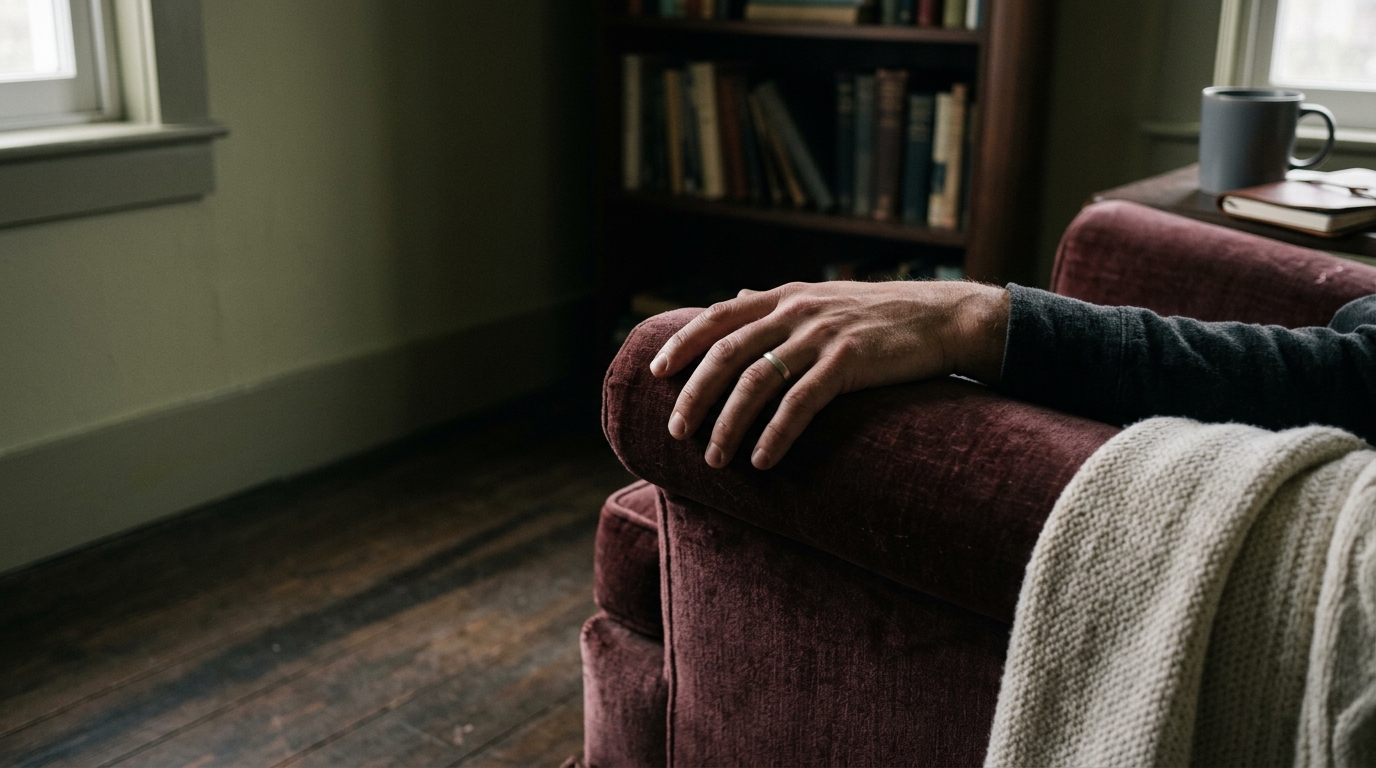
I know where the corners are. I know the hour the light leaves, and I no longer rush to switch on every lamp. There was a time when dusk alarmed me, when I would move through the house lighting things up as if the dark were something that needed to be held off. Now I let the evening finish what it started.
I have often wondered when the fear turned into familiarity. There was no single night when it happened. Nothing announced itself. Fear rarely leaves in one dramatic exit. It wears down slowly, like a step that has been climbed so many times it forgets it was ever sharp, until one day you notice you are no longer afraid, and you can't say when you stopped.
That is what unsettles me most about the comfort. Comfort is supposed to be a sign that something is right. But you can grow comfortable with anything if you stay long enough, including the things that are quietly costing you. The dark has become easy for me, and I have started to ask whether that ease is peace or only surrender.
2. Meeting the Quiet
There is a place where I sit, where the lamplight gives up a few feet short. I never chose it. My body learned it, the way you learn the shape of a habit you never meant to form.
Last night I was there, doing nothing. I was not reading, not scrolling, not planning tomorrow. I was only breathing and noticed that I was breathing, which is a strange thing to notice. It usually means the mind has run out of places to hide.
Then the air shifted, subtly, the way a room changes when someone quietly opens a door. The mattress dipped beside me, the small give of a weight settling in.
I didn't turn around. I didn't flinch. I didn't even reach for my phone, my usual exit hatch from any moment that asks too much of me. Somewhere in the hollow part of my chest, I already knew who it was.
It was the Quiet.
It said nothing, and neither did I. We sat side by side and watched the shadows stretch across the ceiling as the last light drained from the room. It was oddly comfortable, in a terrible sort of way. We were like two old friends who have met too many times. Some friendships are so deep that words become unnecessary. This was the other kind, where every conversation has already been had, every silence memorized, and only proximity remains.
The darkness filled the room the way water fills a glass. It felt like a blanket too thick for summer that you're too tired to push off. You don't fight it. You lie under its weight and call it rest.
When morning came, it left, as it always does. There was no goodbye and no footsteps. It evaporated into the sunlight and left me alone in the ordinary day to do what I do best: pretend I'm fine.
I answer messages. I show up. I say "all good" with just the right warmth. I laugh at the right moments, and nobody checks whether the laughter reaches my eyes. Daylight is a performance, and I have had years of rehearsal.
3. What Silence Holds
I have started to wonder what this silence is actually made of. I don't think it is emptiness. Emptiness would be simpler: a clean white page you could begin again on. This silence is crowded.
It holds the things I never said, folded small and put away. It holds the conversations I rehearsed a hundred times in my head and never had. It holds the versions of me I outgrew but never buried, who still sit somewhere in the house of me, waiting to be acknowledged. It holds the griefs I postponed because the day always demanded something else, and postponed grief doesn't disappear. It waits, and it collects interest.
We tend to think of silence as the absence of sound. But there is a silence that is the presence of everything unspoken, and it has a weight you can feel. It presses on the ribs and settles behind the eyes. It makes the evenings long.
Perhaps that is why the Quiet keeps coming back. It isn't a stranger. It was there for all of it, so it holds the whole archive, and it isn't going anywhere.
4. The Loneliness Within
Only later, in the flat white light of morning, did I understand.
It wasn't a visitor. It wasn't a ghost, or the echo of someone who left, or a memory wearing a stranger's face. It was me.
It was the silence I've been carrying all along, the heavy, cold thing that lives in my ribcage. I used to believe I was lonely because no one was there. Now I see that I'm lonely because I am there, and I've sat in the dark with myself for so long that I've forgotten how to turn on the lights.
We describe loneliness as an absence: an empty chair, a phone that doesn't ring, a name that no longer appears on the screen. That kind is real, and it hurts. But there is another kind that has nothing to do with who is missing. It is the loneliness of being locked in with someone you have never properly met. You share a body, a history, a name, and still you cannot say, honestly, that you know them.
This second loneliness is harder to explain to others, because a crowded room does nothing for it. You can be surrounded and still be the only one who never quite arrives. The problem was never the lack of company. It was the lack of contact with the person who has been present for every hour of your life.
5. Turning On the Lights
"Forgotten how to turn on the lights" is the line that stays with me, because it is more literal than it sounds.
Turning on the lights would mean looking at things plainly. It would mean sitting with the unsaid until it became said, if only to myself. It would mean admitting that the pretending, however skilled, has been a kind of labor, and that every smile spent in public is borrowed against the silence I owe when the door closes.
It is not easy, and I don't think it is meant to be. Light shows you the whole room, including what you have been quietly stepping around. The dark has its mercies: it edits, it softens, it lets you keep the story where you are always fine. Light removes the edit.
But I am beginning to suspect that this is exactly why it matters. You cannot make peace with a room you have never seen. You can only get used to it, and getting used to something is not the same as knowing it.
6. Embracing the Uninvited Guest
I guess I'm just getting used to the company.
Written down, that sounds like surrender, and maybe it is. But sitting with that sentence longer, I notice something else in it. For years I treated this presence as an intruder to be outlasted, a mood to be waited out, a problem to be solved before anyone noticed. Last night I did none of that. I let it sit beside me and I stayed.
That is not nothing. It may be the first time I have looked directly at the thing beside me instead of past it.
I have begun to think that the guest who never leaves is not an enemy. It is the part of me that kept the record while I was busy performing. It carries what I could not carry in daylight. It asks for nothing except that I stop pretending it isn't there. Perhaps what I have been calling loneliness is partly an unanswered invitation, the self waiting, patiently and without words, to be let in.
7. A Journey Toward Self-Acceptance
I don't know whether this is the beginning of acceptance or the most refined form of avoidance. Probably it is both. Healing rarely arrives cleanly. It tends to look like avoidance for a while, because it begins with sitting still.
What I do know is that you cannot reach for a light switch in a room you refuse to admit you're standing in. Acceptance, for me, cannot start with fixing anything. It starts with the plain admission: this is where I am, and this is who is here with me.
So tonight, when the mattress dips and the air shifts, I might turn my head. I might say hello to the guest who never leaves and ask who they really are and what they have been trying to tell me all these years in the only language they know.
Or I might just move the lamp a few inches closer to see what happens.
Loading comments…